
Tailored care · Ages 3 to 16

Children’s Dental Care. Gentle hygiene visits for ages 3 to 16.

Calm, explain-as-I-go hygiene visits for children aged 3 to 16 at Bilton Road Dental Practice. Teeth are gently cleaned, decay risk is checked with you in the room, and fluoride varnish is painted on to help protect the enamel.

  • You stay in the room
  • Explained as I go
  • Fluoride varnish included
  • Short, positive visits
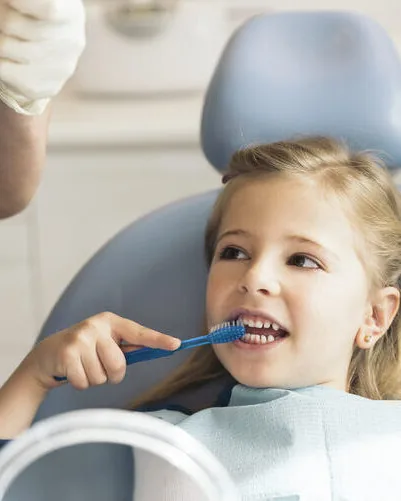
Young girl in the dental chair practising brushing with a toothbrush

Bilton Road Dental Practice · Perivale

The visit

Children’s Hygiene & Fluoride Varnish

£9545 minAges 3–16 Book an appointment
“We go at your child’s pace, and I explain everything before I do it.”Marisa Lennie · GDC 252605

How I make it easier

Small things that make a big difference to children.

Children remember how a visit felt long after they forget what happened. Every part of the appointment is set up so it feels calm and predictable.

  • The aim of the first few visits is simple: that your child leaves happy, and doesn’t mind coming back.

    Marisa LennieDental Hygienist & Therapist

  • Tell, show, then do

    I explain each step in simple words and show the instrument before I use it, so nothing comes as a surprise.

  • You stay with them

    Parents and carers stay in the room. Decay and diet risk are checked with you there, so you hear the advice first-hand.

  • Short and positive

    A 45-minute visit focused on prevention. If your child needs a pause, we pause.

  • Fluoride varnish

    A high-strength varnish (22,600 ppm) is painted on in a minute or two. No injections, no drilling.

  • Fissure sealants

    A thin protective coating for the deep grooves on the biting surfaces of back adult teeth, where advised.

  • Watching teeth come through

    I keep an eye on how adult teeth are coming through, and let you know if your dentist should take a look.

Your child, by age

What helps at every age.

The right toothpaste, the right amount and the right routine change as your child grows. Choose an age to see what national guidance recommends.

Based on NHS (opens in a new tab) and Delivering Better Oral Health, chapter 2 (opens in a new tab).

From the very first tooth.

Start brushing as soon as the first milk tooth appears. The NHS advises taking your child to a dentist when their first teeth come through, or before their first birthday. My children’s hygiene visits start from around age 3.

At home

  • You brush their teeth twice a day, including last thing at night
  • A smear of fluoride toothpaste with at least 1,000 ppm fluoride
  • Avoid sugary foods and drinks, especially at bedtime
  • Only milk or water in bottles, and a free-flow cup from about 6 months

At your visit

  • Ask your dentist about a first check-up
  • From age 3, book a children’s hygiene visit

Building the routine together.

This is when brushing habits are made. Children like to have a go themselves, but they still need an adult to brush, or to help, so every surface gets cleaned.

At home

  • Brush twice a day with a pea-sized amount of fluoride toothpaste (1,000 to 1,500 ppm)
  • Help or supervise so all the teeth are brushed
  • Spit out after brushing, don’t rinse, so the fluoride keeps working
  • Keep sugary food and drinks small and less often

At your visit

  • Fluoride varnish at least twice a year from age 3
  • A gentle clean and a brushing demonstration for you both

New adult teeth need extra care.

The first adult back teeth come through behind the milk teeth, and their deep grooves are easy to miss with a toothbrush. Most children can brush on their own now, but it’s still worth watching them brush properly for about 2 minutes.

At home

  • Fluoride toothpaste with 1,350 to 1,500 ppm, twice a day
  • Watch them brush for about 2 minutes
  • Spit out, don’t rinse
  • Keep sugary snacks and drinks to a minimum

At your visit

  • Fluoride varnish twice a year, more often if risk is higher
  • Fissure sealants on new adult back teeth for children at higher risk of decay

Independent, but not on their own.

Teenagers brush on their own, but busy routines, snacking, sports drinks and braces can all raise the risk of decay and gum inflammation. A hygiene visit is a chance to reset habits without a lecture.

At home

  • Fluoride toothpaste with 1,350 to 1,500 ppm, twice a day
  • Clean carefully around braces and between teeth
  • Spit out, don’t rinse
  • Choose water over sugary and fizzy drinks

At your visit

  • Fluoride varnish twice a year or more if risk is higher
  • Higher-strength toothpaste may be recommended, on prescription, for some teenagers at higher risk

The first visit

What happens, from booking to home time.

  1. 01Before

    When you book

    Tell us your child’s age, any worries and any medical needs. At home, keep the talk light and positive, and avoid words like “hurt”.

  2. 02Arrival

    Getting comfortable

    Your child can sit in the chair, try it going up and down, and meet the mirror and instruments before anything starts.

  3. 03In the chair

    Count, clean, protect

    We count teeth together, I clean gently, and fluoride varnish is painted on. You’re beside them throughout.

  4. 04Afterwards

    Home with a plan

    No eating or drinking for 30 minutes after varnish. You leave knowing the right toothpaste and when to come back.

A note for parents

From me to you.

Marisa Lennie, Dental Hygienist & Therapist

Many parents tell me they were nervous at the dentist as children, and they don’t want the same for their own. That’s exactly how I approach every children’s visit.

I keep things simple and honest. I tell your child what I’m going to do, show them, and only then do it. If they need a break, we take one. If today is just about getting used to the chair, that’s still a good visit.

Good habits at home do most of the work, so you’ll always leave with clear, practical advice. My job is to make the visits the easy part.

Signed, Marisa

Marisa LennieDental Hygienist & Therapist · GDC 252605

In Patients’ Words

“By far the most gentle but thorough.”

Read more patient reviews

“Great practice with an attentive and friendly team. I’ve been to several hygienists/therapists before and found Marisa to be by far the most gentle but thorough. Her assistant was also super friendly. I’ll be happy to have my treatment here again in the future and can genuinely recommend the practice to anyone.”

MR · Google Review

“A special thank you to Marisa, my hygienist. She is exceptionally professional, thorough, and gentle, always making me feel comfortable during my appointments. Her attention to detail and dedication to excellent care are truly appreciated.”

Greta Rimutė · Local Guide · Google Review

For Children FAQs

What parents ask me most.

Can’t see your question? Email me or call 020 8997 0933.

How much is a children’s hygiene visit?

A Children’s Hygiene & Fluoride Varnish visit is £95 for 45 minutes. It includes a gentle clean, a brushing demonstration, a decay and diet risk check with the parent present, and fluoride varnish.

What age can my child see a hygienist?

My children’s hygiene visits are for ages 3 to 16. The NHS advises taking children to a dentist when their first milk teeth come through, or before their first birthday.

Is fluoride varnish safe for children?

Fluoride varnish is recommended in national guidance for children from age 3, at least twice a year. A small amount is painted on by a professional, and it sets quickly. There are no injections.

What are fissure sealants?

Fissure sealants are a thin protective coating painted onto the deep grooves of the biting surfaces of back adult teeth, to help stop food and bacteria collecting there. National guidance recommends them for children at higher risk of decay as the adult teeth come through.

Can I stay in the room?

Yes. Parents and carers stay with their child for the whole visit, and the decay and diet risk check is done with you there.

What if my child won’t open their mouth?

That’s fine, and it happens. We go at their pace. Sometimes a first visit is simply about sitting in the chair and getting used to the room, and we build from there next time.

Do we need a referral from a dentist?

No. Dental hygienists and therapists in the UK can be seen under GDC direct access, so you don’t need a referral for routine hygiene and prevention. If your child needs to see a dentist, I’ll let you know.

Marisa Lennie, Dental Hygienist & Therapist

Written & clinically reviewed by

Marisa Lennie

Dental Hygienist & Therapist · Dip DHDT (RCS England) · GDC 252605

Last reviewed

Marisa qualified through the Royal College of Surgeons of England, training clinically at King’s College Hospital, London. She treats patients at Bilton Road Dental Practice in Perivale and is an Approved Education Supervisor for trainee hygienists & therapists.

Sources & guidance

  1. NHS: Taking care of children’s teeth Page reviewed June 2025
  2. Delivering Better Oral Health, chapter 2: summary guidance tables for dental teams Updated September 2025
  3. Oral Health Foundation: Fluoride Toothpaste strengths by age
  4. General Dental Council: Direct access

This page is general information to help you prepare for a visit. It isn’t a diagnosis or personal clinical advice: care is based on an assessment on the day. If you or your child have severe pain, swelling or bleeding that won’t stop, contact a dentist urgently or call NHS 111.

Book a gentle first visit for your child.

Call the practice or send an email to book your appointment.

Bilton Road Dental Practice · 56 Bilton Rd, Perivale, Greenford, London, UB6 7DH

Perivale, in the London Borough of Ealing (UB6). Close to Greenford, Alperton, Sudbury, Hanwell and Northolt.

Please note

Before you continue

This website is currently under construction. While we try to keep everything accurate and up to date, some content, treatment details or information may be incomplete or out of date. Please contact the practice directly to confirm anything important before making decisions about your care.

Book an appointment

Send a request and I’ll get back to you by email or phone to arrange a time. Prefer to talk? Call the practice on 020 8997 0933.

Days and times that suit you are helpful. Please don’t include medical details; we’ll go through your health at the appointment.

Your details are used only to reply to you. Privacy and cookie policy (PDF, opens in a new tab)